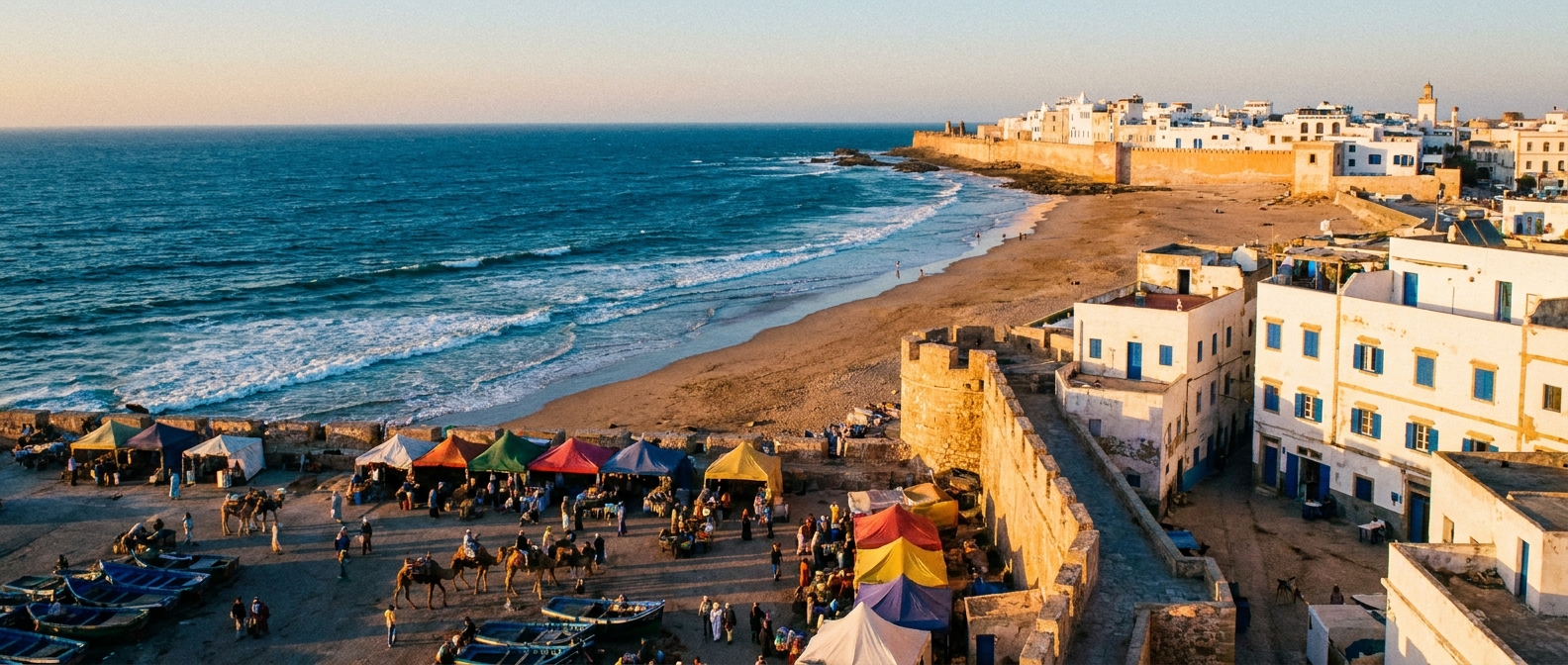
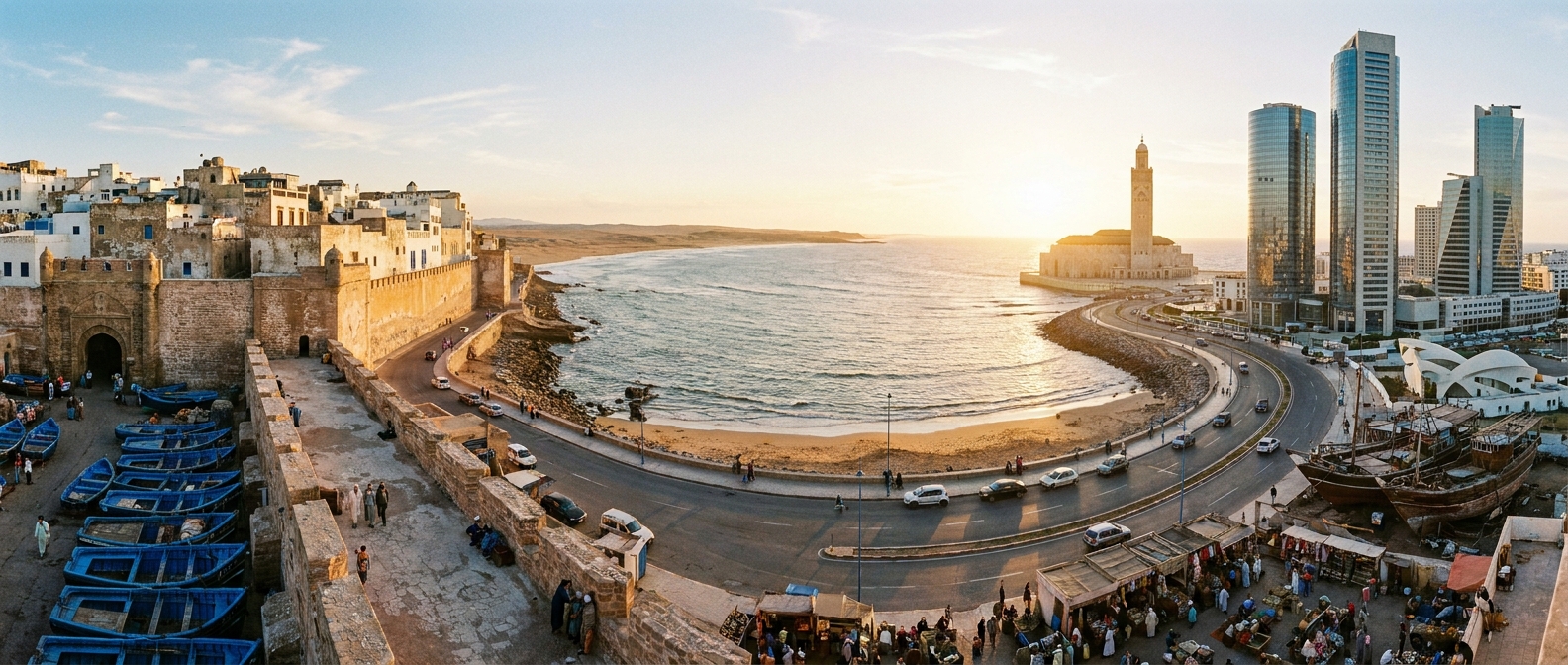
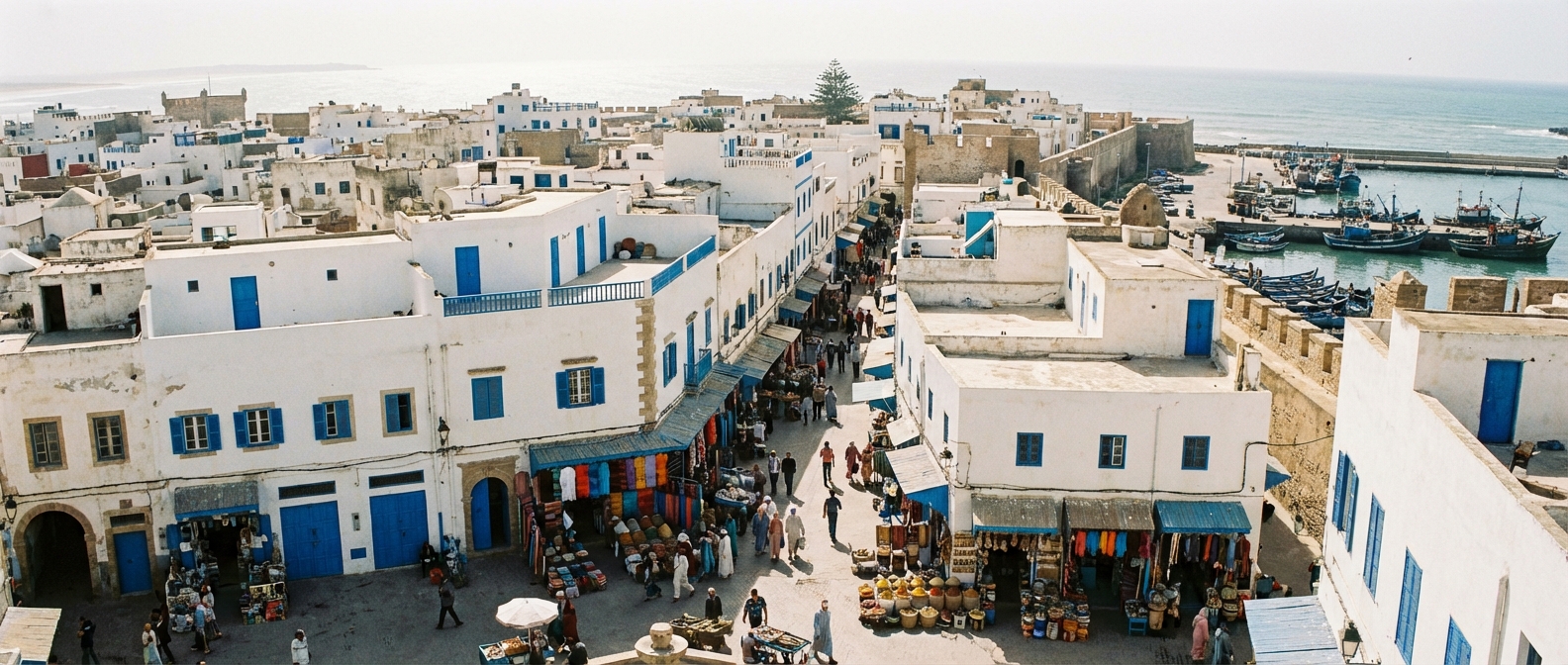
Let’s be honest — there’s nothing worse than landing in a gorgeous destination like Essaouira and realizing you can’t pull up directions, message home, or post that perfect sunset shot. This windswept coastal city on Morocco’s Atlantic coast draws travelers in with its blue-shuttered medina, fresh-off-the-boat seafood, and laid-back beach vibes. But staying connected while you’re there? That takes a little planning.
Here’s the good news: you’ve got options. Whether you prefer the tried-and-true physical SIM card or want to go the modern route with an eSIM, Essaouira has you covered. And the choice between them really comes down to how you like to travel. Physical SIM cards give you a local Moroccan number and are easy to top up at corner shops. eSIMs, on the other hand, let you skip the store visit entirely — just download, activate, and you’re online before your plane even touches down. Let’s break down everything you need to know.
How Morocco Got Connected (A Quick History)
Morocco’s mobile story started in the late 1990s, and honestly, the transformation has been remarkable. What was once a patchwork of limited coverage has evolved into a solid, reliable network that reaches even smaller cities like Essaouira. Fast forward to today, and eSIM technology is reshaping the game entirely — no more hunting for a shop, no more fumbling with tiny plastic cards.
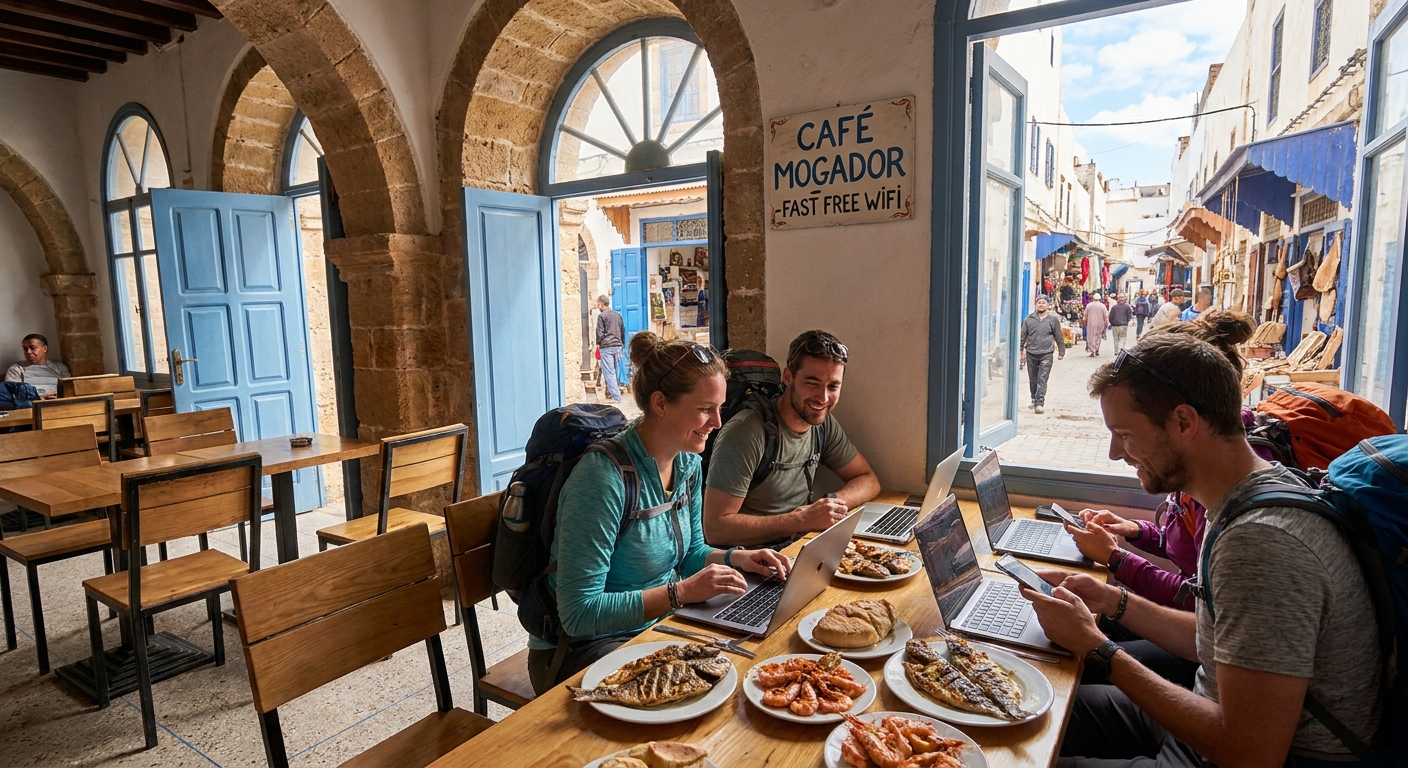
Essaouira itself reflects this shift beautifully. It’s a city where ancient medina walls meet modern connectivity, where artisan workshops sit alongside cafés with strong WiFi. The infrastructure is there, and it works.
Your SIM Card Options in Essaouira Right Now
So what can you actually buy? As of 2026, three major players dominate the Moroccan market: Maroc Telecom, Orange, and Inwi. All three offer prepaid tourist-friendly plans, and you’ll find their shops scattered around town — plus plenty of smaller vendors who stock their SIM cards.
But here’s where it gets interesting. eSIM providers like Airalo, Holafly, and Nomad have entered the scene with Morocco-specific plans. The appeal? You can set everything up from your couch at home, and the moment you land, you’re connected. No searching for a shop, no language barriers, no waiting.
What You’ll Actually Pay
The pricing in Essaouira is genuinely reasonable — one of those pleasant surprises that makes budget travelers happy. A physical SIM card runs about 10–30 MAD (that’s roughly $1 to $3 USD), and data packages scale up from there. Expect to pay around 20 MAD for 1GB or 150 MAD for a generous 20GB.
eSIMs cost a bit more upfront, but many travelers find the convenience worth it:
- Airalo has a solid 10GB for 30 days plan running about $25 USD.
- Holafly goes all-in with unlimited data for around $3.90 per day.
Tips From Those Who Know
One thing that catches some travelers off guard: you’ll need your passport to register any SIM — physical or electronic. It’s Moroccan law, and there’s no getting around it. My advice? Head to an official carrier store if you can. The staff tend to be more helpful, prices are clearly marked, and you avoid the guesswork that sometimes comes with smaller shops.
Tech analyst Alexandra Smith puts it well: “The shift from traditional SIM to eSIM mirrors how we travel now — we want instant access, flexibility, and minimal hassle. For tourists especially, eSIMs just make sense. You can switch plans, upgrade on the fly, and never lose that tiny piece of plastic.”

What’s Trending in Essaouira’s Connectivity Scene

The momentum is clearly moving toward eSIMs. More smartphones support them now — we’re talking most recent iPhones, Samsung Galaxy devices, Google Pixels, and plenty of others. And in Essaouira specifically, travelers are catching on. The combination of pre-arrival setup and solid international provider coverage makes eSIMs increasingly attractive.
Think about it: you land, turn off airplane mode, and boom — you’re navigating to your riad within minutes. That kind of seamless experience is hard to beat, especially after a long flight.
A Few Bumps in the Road
That said, it’s not all smooth sailing. If you’re buying a physical SIM in the medina’s smaller shops, don’t expect everyone to speak English. Communication can get tricky, and some travelers have reported inconsistent experiences — confusing pricing, plans that weren’t quite what they expected. Sticking to official carrier stores helps avoid most of these headaches.
There’s also an ongoing debate about value. Are eSIM prices justified when local SIMs are so cheap? It depends on what you value more: rock-bottom prices or skip-the-hassle convenience. Neither answer is wrong.
The Bottom Line
Getting connected in Essaouira isn’t complicated — you just need to know your options. Physical SIM cards are affordable and widely available, with shops throughout the city carrying them. eSIMs offer a more modern, streamlined approach that many travelers now prefer. Either way, you’ll have reliable coverage for navigating the winding medina streets, researching that perfect seafood restaurant, or keeping family updated on your adventures.
If flexibility and convenience matter most to you, an eSIM is probably your best bet. If you want the absolute cheapest option and don’t mind a quick shop visit, grab a local SIM. Simple as that.
Frequently Asked Questions
What are the best options for SIM cards in Essaouira?
Your main choices are Maroc Telecom, Orange, and Inwi — all three offer solid prepaid plans for tourists at reasonable prices.
Can I get an eSIM in Essaouira?
Absolutely. Providers like Airalo, Holafly, and Nomad all cover Morocco, and you can purchase and activate your plan before you even arrive.
How much do SIM cards cost in Essaouira?

The SIM itself typically costs 10–30 MAD ($1–3 USD). Data packages vary depending on how much you need — anywhere from 20 MAD for basic usage to 150 MAD for heavier data plans.
Do I need a passport to buy a SIM card?
Yes — it’s required for registration whether you’re buying a physical SIM or activating an eSIM.