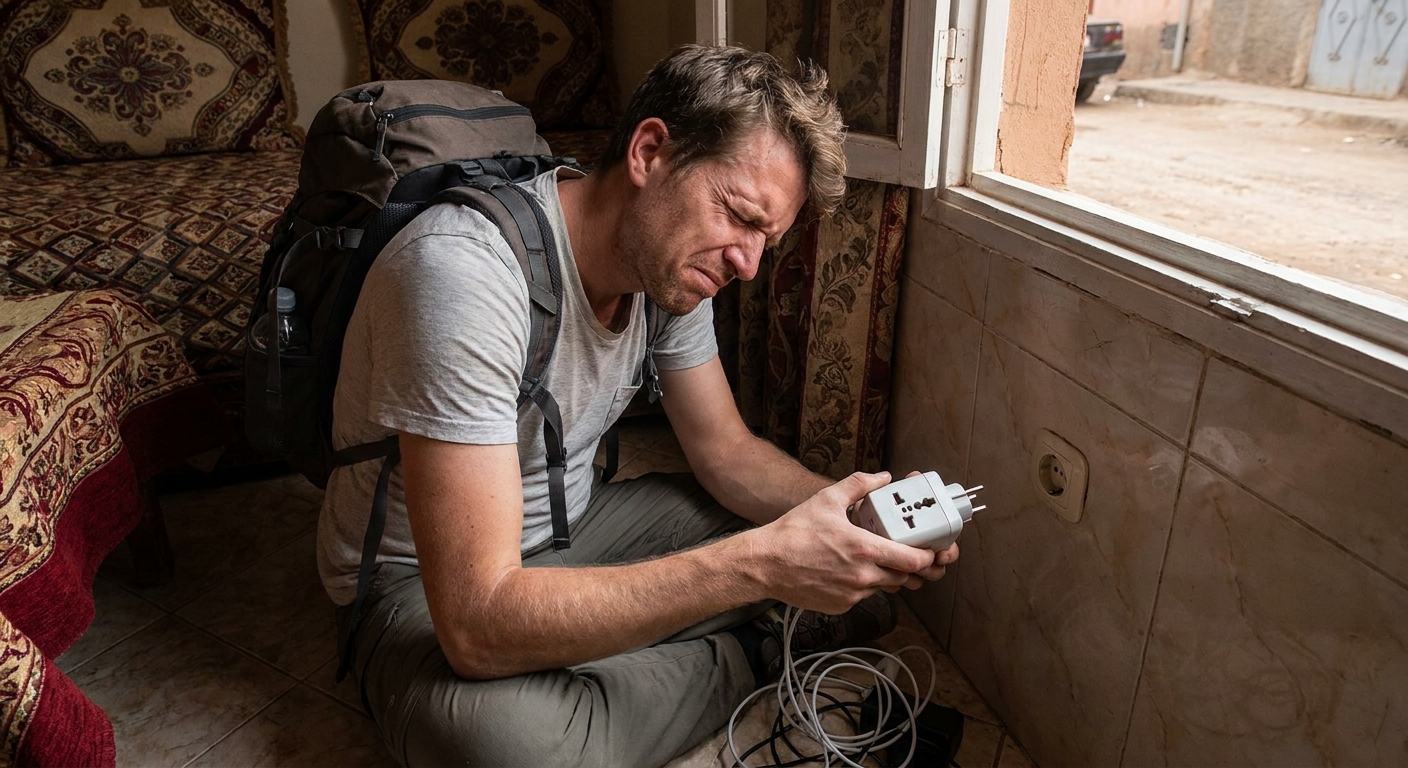
Picture this: you’ve just arrived in Marrakech after a long flight, your phone’s at 3%, and you’re staring at a wall outlet that looks nothing like the ones back home. Sound familiar? Don’t worry — with a little prep work, you can avoid this all-too-common travel hiccup.
Here’s the deal. Morocco uses Type C and Type E plugs, running on 220–230 volts at 50 Hz. If you’re coming from Europe, you’re probably in good shape. But if you’re traveling from the US, Canada, or Australia? You’ll definitely want to sort out your adapter situation before you go.
A Quick Look at Morocco’s Electrical History
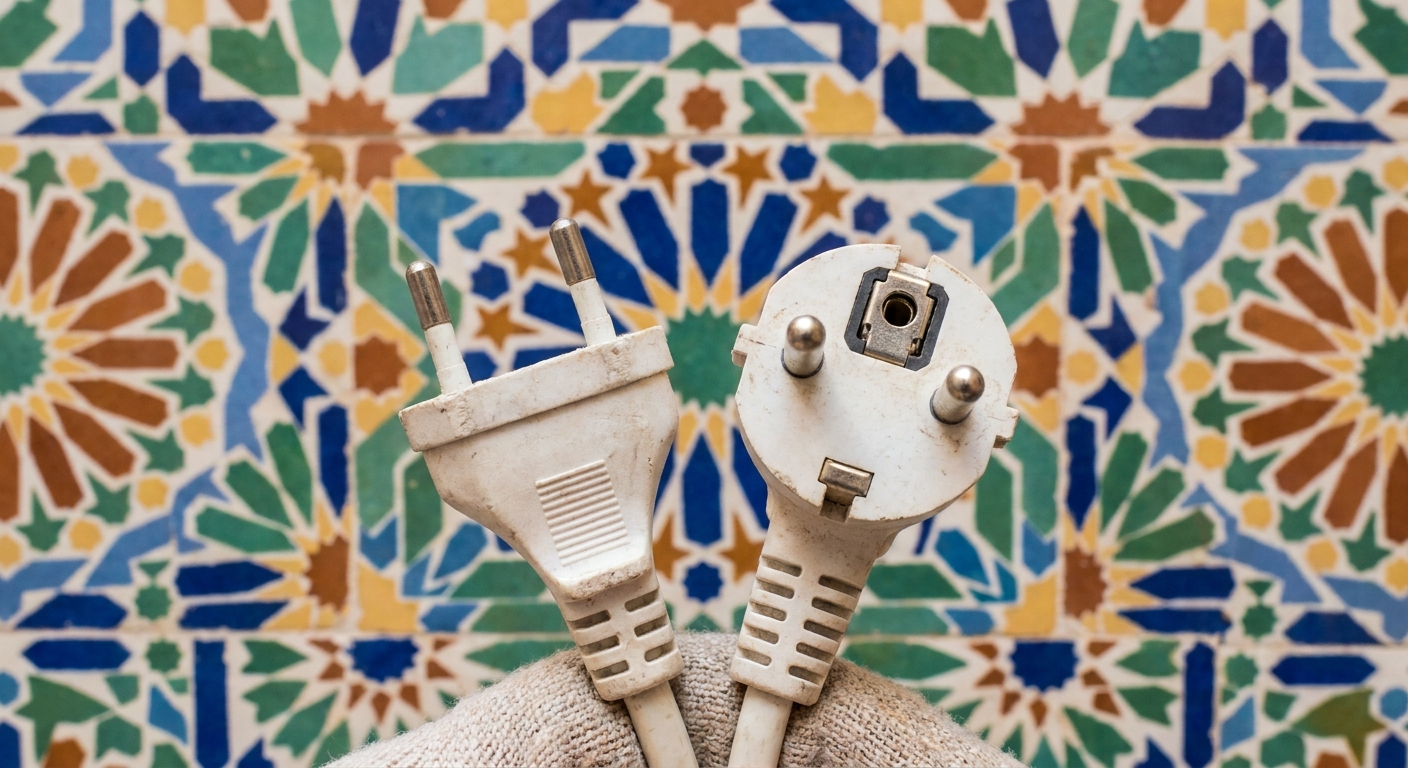
Morocco’s electrical setup tells an interesting story. The country’s use of Type C (the classic Europlug) and Type E sockets goes back to its historical ties with France — and that connection stuck around even after independence in 1956. It’s one of those little details that makes sense once you know the backstory.
So what does this mean for you? The Type C plug has two round pins and works great for most devices that don’t need grounding. The Type E plug looks similar but includes a grounding hole — handy for appliances that require that extra safety feature. You might also spot some Type F compatibility in certain places, which gives you a bit more flexibility.
Do You Actually Need a Plug Adapter?
Short answer: probably yes, depending on where you’re from.
If you’re coming from the US or Canada (Type A plugs) or the UK (Type G plugs), a Type C/E adapter is non-negotiable. Now, here’s some good news — check the fine print on your chargers. See “100–240V, 50/60Hz” written somewhere? That means you only need an adapter, not a voltage converter. Most laptops, phones, and tablets fall into this category.
But — and this is important — older appliances like certain hair dryers or electric razors might be single-voltage. Plug one of those into a Moroccan outlet without a converter, and you’ve got yourself an expensive paperweight. Not ideal.
Morocco’s Electrical Specs at a Glance
Let’s break it down simply:
- Plug Types: Type C (two round pins) and Type E (two round pins plus grounding)
- Voltage: 220-230V
- Frequency: 50 Hz
- Who needs an adapter: Travelers from the US, UK, Canada, and Australia
- Who’s probably fine: Most of continental Europe
What the Experts Say About Voltage
Travel pros consistently recommend grabbing a Type C/E adapter — it’s your best bet for covering most situations in Morocco. The reality is that most of your everyday tech (phones, tablets, laptops) handles dual voltage like a champ. Just double-check before you pack.
That said, don’t assume everything’s compatible. Take 30 seconds to look at each charger and device. It could save you from a frustrating (and potentially expensive) surprise.
What’s Trending in Travel Adapters
Here’s something interesting: as we become more dependent on our devices while traveling, adapter technology has seriously stepped up. The popular picks these days? Compact universal adapters with built-in USB ports. Some even offer USB-C fast charging — because who wants to wait around for their phone to charge when there’s exploring to do?
There’s also growing interest in energy-efficient adapters that minimize power draw. Good for your devices, good for the planet. Win-win.
Common Pitfalls to Watch Out For
Let’s be honest — most of us don’t think about voltage compatibility until we’re standing in a foreign hotel room. And that’s where things can go wrong.
The biggest mistake? Assuming all your devices will work. They won’t necessarily. Another common issue: waiting until you arrive to buy an adapter. Sure, you can find them in Morocco, but do you really want to spend your first day hunting down an electronics shop instead of exploring the medina?
Some travelers also mention that finding reliable information about local electrical standards can be surprisingly tricky. Consider this your heads-up — now you know what to expect.
The Bottom Line: Be Prepared
Morocco runs on Type C and Type E plugs at 220-230V and 50 Hz. If that’s different from what you use at home, you’ll need an adapter. Most modern gadgets handle the voltage just fine, but older appliances might need a converter too.
The smart move? Sort this out before you leave. Toss a reliable adapter in your bag, verify your devices are dual-voltage, and you’re set. That way, when you land in Morocco, you can focus on what actually matters — the incredible food, the stunning architecture, the vibrant markets.
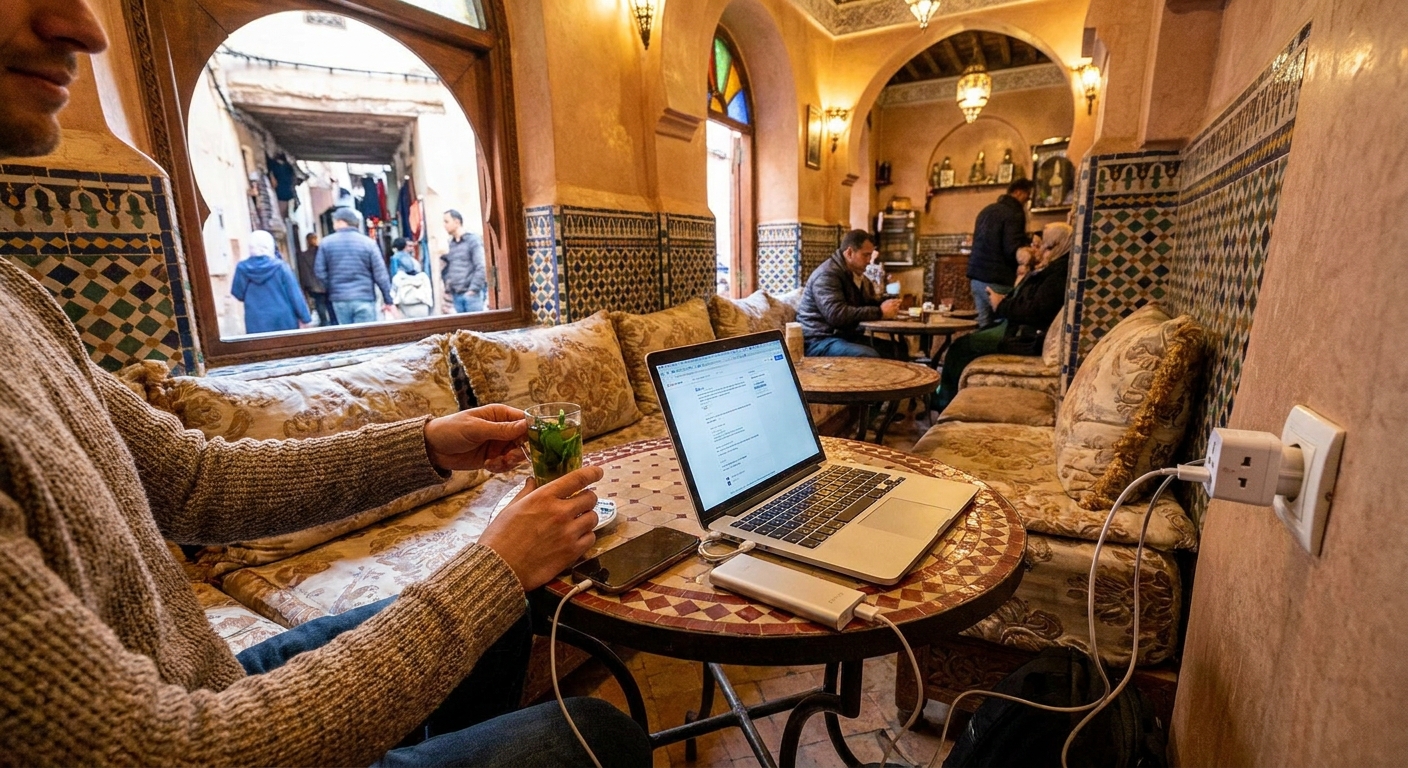
Trust me, you don’t want electrical issues stealing any attention from that first cup of Moroccan mint tea.
Frequently Asked Questions
What type of plug adapter do I need for Morocco?
You’ll want a Type C or Type E adapter. Most universal travel adapters include these, so you’re covered either way.
Is it safe to use my devices in Morocco?
Absolutely — as long as they’re dual-voltage (look for “100–240V” on the label). Single-voltage devices? You’ll need a converter, or risk frying your electronics.
Do I need a separate voltage converter?
Only if your device isn’t dual-voltage. Check the labels — most modern chargers and electronics handle both voltages without any issues.
Will my USB chargers work in Morocco?
Almost certainly yes. Most USB chargers are designed for worldwide use. Just pair yours with the right plug adapter and you’re good to go.