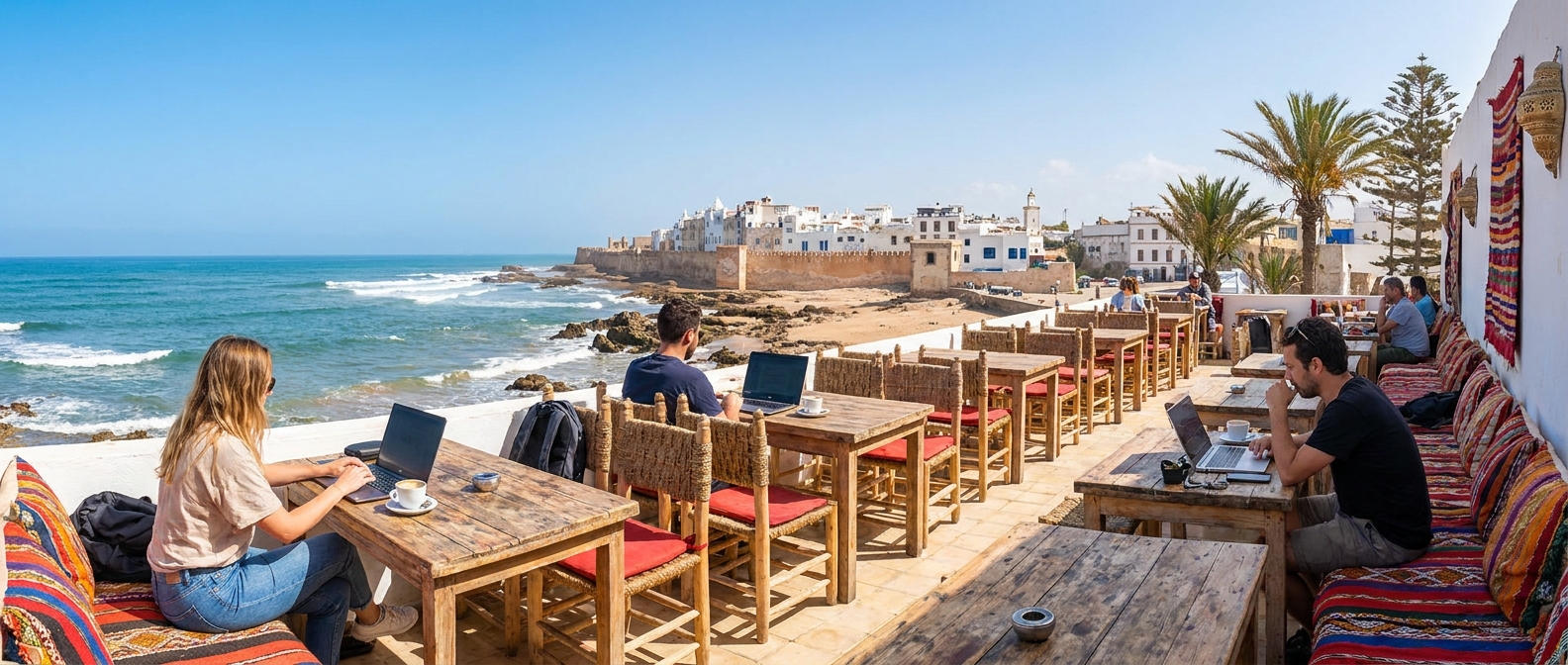
Essaouira in Morocco is a uniquely wonderful town. It is an active center of artists, musicians and history. You may love Essaouira for the beaches and the bohemian feel, but it has so much more to it.
This ancient port is Mogador in Morocco. It has served as a critical connection between Africa and the rest of the world for thousands of years. Look to the massive stone-seawalls; each bend in each lane has it’s own epic history to tell.
The foundation of knowledge that gives authority to the town is its designation as a UNESCO World Heritage Site. The world is in agreement that the history of Essaouira is a unique treasure.
It perfectly melds the military geniuses, royal ambition, and the outreach of global trade. Let’s try to explore how the “Wind City of Africa” found soul.
I. The Earliest Secrets: Purple Dye and Ancient Traders
The story of Essaouira kicks off ages ago—way, way before Roman soldiers were even marching across North Africa. Its location right on the Atlantic coast was just too strategic to ignore. That natural, protected bay, plus the islands nearby, made it the ideal spot for any early ship needing safe harbor.
The Original Sailors and the Royal Riches
We’re talking 7th century BC! The Phoenicians—those legendary traders—were the first to set up shop here. Later came the Carthaginians, who dropped anchor and made a small settlement. These early visitors needed places to resupply and trade, simple as that. Right then and there, the seeds for a major global port were planted.
But the area’s first real taste of fame came later, around the 1st century AD, thanks to King Juba II. This King, who was also a serious scholar, figured out that a quiet treasure was waiting just off his shores: a huge supply of sea snails.
Why did anyone care about little sea snails? Because they were the raw ingredient for the powerful Tyrian Purple dye. This dye was ridiculously expensive and so rare that only literal royalty and the absolute richest nobles could wear the color. Juba II smartened up and turned the area into a flourishing industrial center for this “purple gold.” Suddenly, this quiet stretch of Moroccan coast was on the radar of massive empires, from the Romans all the way up to the Byzantines.
The Portuguese Arrive
Centuries kept rolling by, and the coast remained a busy spot for trade. Then, in the 16th century, a new maritime giant showed up: the Portuguese. They were building an enormous global empire and absolutely needed a fortress here to keep their sea lanes in check.
They named their small base Mogador. Now, the name Mogador has a complicated background. Some folks say it came from the local Berber phrase, Amegdul, meaning “well-protected.” Others argue it came from the Phoenician word Migdol, meaning “small fortress.” Either way, the Portuguese didn’t stick around long. The local Saadian tribes were having none of it. They attacked fiercely and often until the Portuguese finally had to pack up and abandon the site.
The land held its own, but the true Essaouira you see today hadn’t been built yet.
II. The Sultan’s Perfect City: The Rebirth of Mogador
The most impressive part of Essaouira’s history begins right in the middle of the 18th century. It all happened thanks to one guy’s huge vision: the Alaouite Sultan Sidi Mohammed ben Abdallah (Mohammed III).
A Stroke of Strategic Genius
The Sultan was totally focused on modernizing Morocco and opening up better, more reliable trade links with Europe. He needed a loyal, efficient port on the Atlantic coast. His old ports were either too far from his capital in Marrakech or, frankly, couldn’t be fully trusted.
The Sultan came up with an amazingly smart solution. He decided to imagine a straight line from Marrakech right to the Atlantic shore. He would build his new, main commercial port exactly where that line hit the coast. That exact spot? The small, sheltered bay of Mogador.
This choice was pure brilliance. It created a direct, secure trade path that bypassed all the old, difficult routes. That historical “straight line” is actually still the main road you take when driving from Marrakech to the coast today.
The Master Plan and the New Name
Sultan Mohammed III wasn’t just after a functional harbor; he demanded a perfectly planned city.
He went out and hired a very clever French military architect named Théodore Cornut to design the fortifications and the entire urban layout. Cornut used the freshest ideas from Europe—specifically inspired by the military engineer Vauban—to craft what is essentially a masterpiece.
The brand new city featured a revolutionary grid plan inside the massive defensive walls, making it super easy to find your way around and, more importantly, easy to defend. This was a massive change from the famously unplanned, confusing medinas in other Moroccan cities.
Once the city was done, it got a brand new name: Essaouira. That name comes from the Arabic word souira, which literally translates to “the beautifully designed” or “the well-designed.” The name itself was a tribute to the beautiful logic of the Sultan’s vision.
Those amazing fortifications—especially the huge stone walls we call the Skala—were built using simple, strong local materials. They perfectly show off a unique architectural mashup: the serious military strength of Europe blended perfectly with classic Arabo-Muslim style.
III. A True Melting Pot of People and Ideas
Under Sultan Mohammed III, Essaouira absolutely exploded into its golden age. It quickly became the number one port, often nicknamed the Port of Timbuktu, handling much of the trade that flowed out of the African interior, across the Sahara, and then headed towards Europe.
The Community of Traders
Because the Sultan guaranteed safety and a predictable business environment, merchants started pouring into Essaouira from every corner of the known world. The city became a lively, genuine melting pot of cultures.
The population included all sorts of people: Amazighs, Arabs, Africans, and Europeans. A key part of the population was a large, successful Jewish community. The Sultan actively encouraged Jewish families to settle here, knowing they were essential as international traders and diplomats who could easily talk and do business with various European countries.
The Jewish quarter, or Mellah, comprised a massive section inside the walls of the city. This community was absolutely paramount to the cultural and commercial life of the city. Even though the community has declined over the years, Essaouira still vigorously affirm this relationship with a very specific attention to history. Visitors can visit restored synagogues and listen to stories about the annual pilgrimage, the Hiloula, commemorating the holy Rabbi Haïm Pinto.
The Unique Cultural Gifts
There is one other thing that makes Essaouira unique: the Argan forests surrounding Essaouira. These specific trees are thought to be endemic only to this southwestern part of Morocco. The oil from Argan nuts is famously referred to as “liquid gold,” and is used for cooking and in beauty products.
Traditionally, the way this oil is harvested is closely observed to the local culture, and provides an important and reliable source of income to the communities. Just outside of the city on your drive, be on the lookout for the classic sight of local goats climbing that trees, just to eat the fruit.
IV. Contemporary Art, Music, and Media Fame
Regrettably, the period of time that the city was the number-one port began to disappear in the 19th and 20th centuries, including issues related to the French navy bombardments in 1844 and modern port cities such as Casablanca and Agadir that out-shined Essaouira over time.
The Artist’s Retreat
The interesting thing is that as its commercial fortunes faded away, Essaouira Mogador found an entirely different purpose. The slower, more peaceful way of life, the remarkable buildings and the exceptional quality of light—artists always emphasize just how special it is—began attracting writers, painters, and musicians.
All the artistic activity really ramped up throughout the 1960s and 70s. The city became a favored hideout for countercultural types. The best-known story is about the iconic figure of rock and roll, Jimi Hendrix, even though the latter-day tellings of his experience have obviously taken on an element of wildness.
What is the case, though, is that people like Cat Stevens and many others found that bohemian, laidback attitude infectious. Essaouira’s current reputation as a creative, free-spirited locale is an affray of this legacy.
The Rhythm of Gnaoua
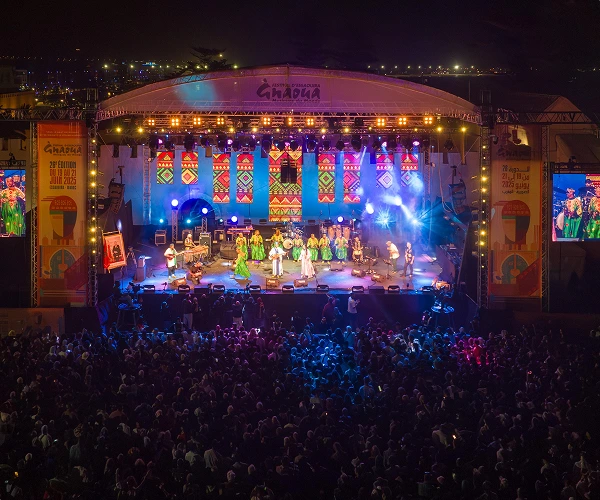
The Gnaoua World Music Festival is the largest cultural treasure of contemporary Essaouira. This enormous annual event that celebrates the spiritual and rhythmic music of the Gnaoua. A people descended from former soldiers and slaves who migrated to Morocco from Sub-Saharan Africa. Gnaoua music is a rich, almost trance-inducing blend of supercharged African, Berber, and Arabic rhythms.
Each year the festival attracts hundreds of thousands of people, transforming Essaouira into a giant celebration of sound, spirit, and community. This is a compelling contemporary way to commemorate the city and its complex and diverse multi-ethnic roots.
The Ramparts of Westeros
Lately, the old port and its huge ramparts have become a favorite backdrop for huge TV and film projects. The most famous example is that Essaouira was used as the location for the fictional slave city of Astapor in the massive show Game of Thrones.
So, when you stand on those ramparts today, looking out at the sea, you’re actually walking right on the same movie sets that stood in for a fantasy world—which really just proves how timeless and dramatic the look of this city is.
V. Visiting the History of Essaouira Today
Visiting Essaouira, Morocco, is your chance to step right into the pages of this incredible history book.
The Must-See Sights:
- The Medina: This is the heart of everything. It’s a beautifully organized UNESCO site. Feel free to get a little “lost” in those easy-to-navigate blue and white lanes, browsing artisan workshops and busy souks (markets).
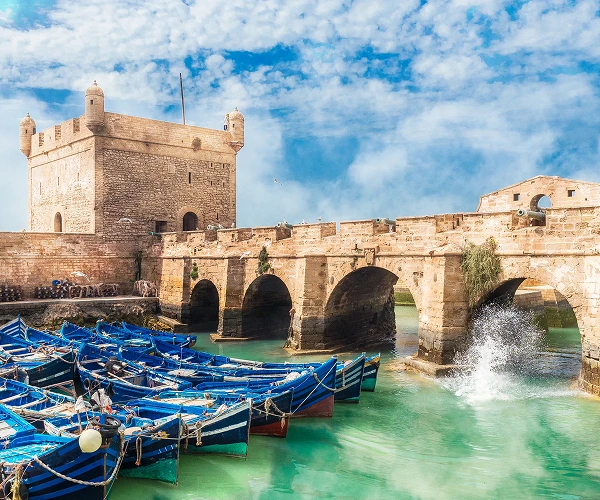
- The Skala de la Ville: These are the truly magnificent seawalls. They’re the absolute best spot to appreciate the old-world military design. Walk the top, check out the historic brass cannons still aimed out at the ocean, and try to imagine those old naval battles.
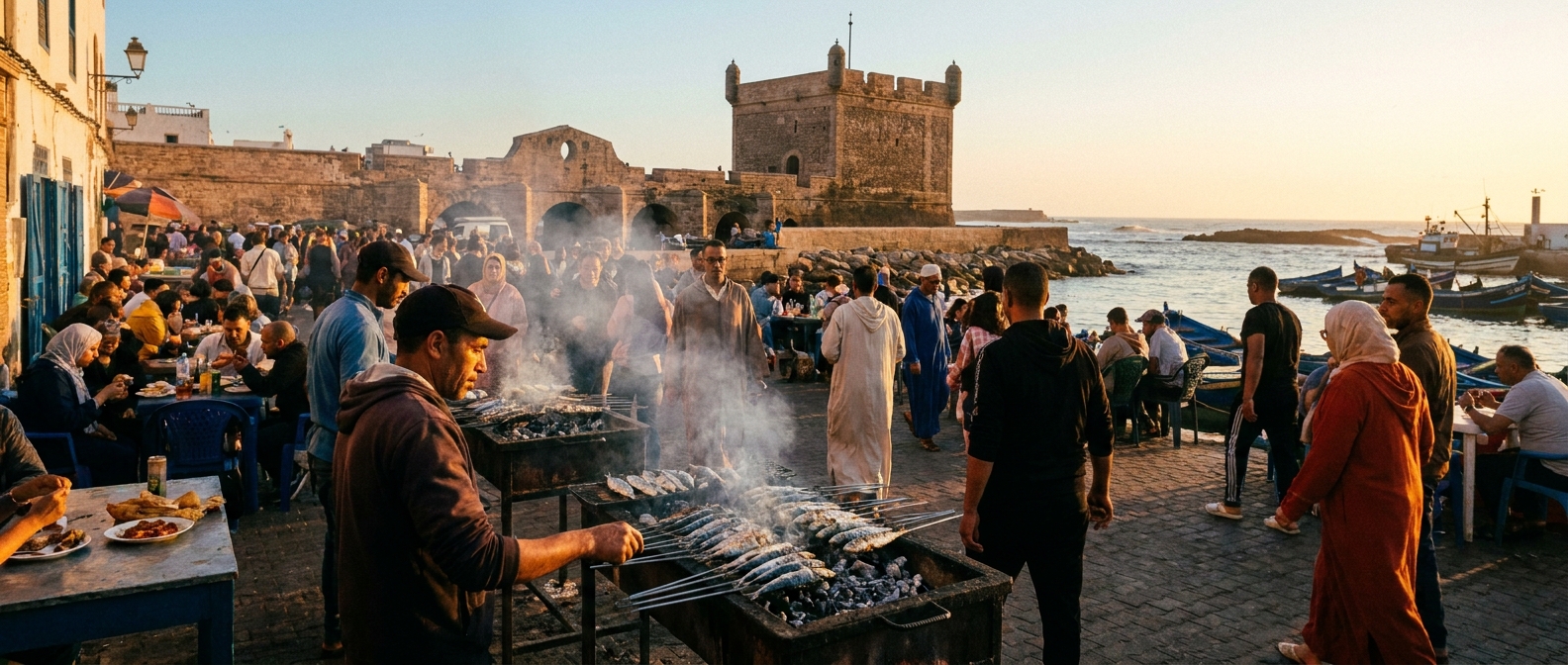
- The Port: Go down to the buzzing harbor. It’s still full of those famous bright blue fishing boats. You can watch the fishermen repairing their nets and, here’s the best part, eat the freshest seafood you’ll ever have, often grilled right in front of you.
- Mogador Island (Île de Mogador): This island, just a short distance offshore, is now a protected nature reserve. It’s a key sanctuary for rare birds (like the endangered Eleonora’s falcon). Because it’s so sensitive, visitors are usually asked not to land, but you get a great view of it from the ramparts.
Activities that Connect to the City’s Soul:
The powerful, continuous wind gave the city its nickname: “The Wind City of Africa.” Naturally, this makes it a top-tier spot for kitesurfing and windsurfing.
If you prefer a slower pace, Essaouira’s long, sandy beach is famous for horseback riding. Trotting along the coastline, feeling the wind and seeing the old city walls in the distance, is an experience that genuinely connects you to the city’s epic, timeless story.
Conclusion: The Enduring Charm of Essaouira
Think about its journey: from a tiny supplier of purple dye to emperors, to its 18th-century rebirth as a perfectly designed global port, and now to its modern life as a haven for musicians and travelers—the history of Essaouira is a story of non-stop, beautiful change.
The city formerly known as Mogador still holds its unique soul. It truly is a spot of rare cultural balance, architectural genius, and pure natural beauty.
Whether you’re craving the peace of the sea, the rich history of those ramparts, or the pulsing rhythms of Gnaoua music, Essaouira, Morocco, is waiting for you. Make sure you visit, walk its streets, and just soak up the powerful story of this magical coastal jewel. You absolutely won’t regret it.
Frequently Asked Questions (FAQs) about Essaouira
Why is Essaouira a UNESCO site?
It is an outstanding example of an 18th-century fortified port town, blending European and Moroccan architecture.
What was Essaouira called before?
It was most famously known as Mogador, derived from Berber or Phoenician words meaning “fortress.”
Is Essaouira good for swimming?
The beaches are beautiful, but the water can be cool, and the strong wind often makes it better for watersports.
Is Jimi Hendrix associated with the city?
Yes, he visited in the 1960s, which helped establish the city’s counterculture and artistic reputation.
What is the most popular food to eat there?
Freshly grilled seafood, especially sardines, bought directly from the fishing port.
What is the Gnaoua Festival?
It is a massive annual music festival celebrating Gnaoua, a spiritual and rhythmic music with African roots.
What is the significance of the Argan tree?
Essaouira is surrounded by Argan forests; the oil is a valuable local product known as “liquid gold.”
Can I do a day trip from Marrakech?
Yes, it is a very popular and feasible day trip, taking about three hours each way by road.
Why is the city painted blue and white?
This color scheme is traditional, reminiscent of European coastal towns and providing an aesthetic appeal.
What can I buy as a souvenir?
You can find unique woodwork crafted from local Thuya wood, leather goods, and Argan oil products.